Why DIFC 2.0 Could Be Dubai's Next Billion-Dollar Property Investment Opportunity
Dubai has never lacked ambition. From the transformation of Sheikh Zayed Road into a global financial corridor to the rise of Downtown Dubai, Business Bay, and Dubai Creek Harbour, the city has repeatedly created investment zones that generated extraordinary wealth for early buyers. The next chapter may already be unfolding through DIFC 2.0, a strategic expansion connected to the Dubai International Financial Centre that is attracting growing attention from investors, developers, and business leaders.
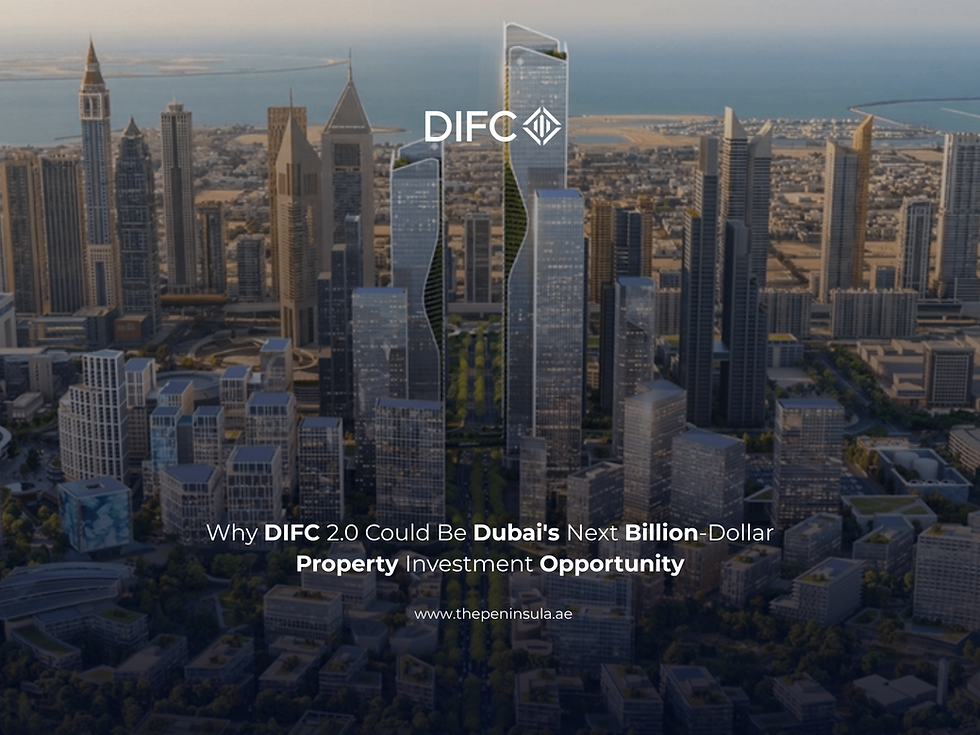
For investors searching for the next major opportunity before prices fully mature, DIFC 2.0 deserves serious consideration. The project is not simply another residential launch; it represents an expansion of one of the most prestigious financial districts in the Middle East. If executed at the scale envisioned, it could become one of Dubai's most valuable real estate ecosystems over the coming decade.
Understanding DIFC 2.0
The original Dubai International Financial Centre has established itself as a leading financial hub connecting the Middle East, Africa, and South Asia. It hosts international banks, asset managers, legal firms, fintech companies, and multinational corporations within a highly regulated business environment. DIFC 2.0 is positioned as the next phase of this ecosystem, extending the district with new commercial, residential, hospitality, and lifestyle components.
More information about the district vision, investment opportunities, and project updates is available at DIFC2.com.
The key distinction is that DIFC 2.0 is being developed around an already functioning financial powerhouse rather than in an unproven location. Investors are not betting on whether the area will become important; they are assessing how much additional value can be created as the district expands.
Why Financial Districts Create Exceptional Real Estate Wealth
Historically, properties surrounding major financial centres tend to outperform broader markets because they benefit from a concentrated base of high-income professionals and businesses. Demand is driven by executives, entrepreneurs, consultants, lawyers, wealth managers, and international employees who prioritise proximity to work, premium amenities, and strong infrastructure.
In Dubai, the original DIFC demonstrated this pattern clearly. Office demand, luxury residential demand, and hospitality demand reinforced each other, creating a powerful value cycle. DIFC 2.0 has the potential to extend that cycle into a new generation of assets.
The Location Advantage
Location remains the single most important factor in real estate investment, and DIFC 2.0 benefits from exceptional connectivity. The district sits within Dubai's central business corridor, offering convenient access to:
Sheikh Zayed Road
Downtown Dubai
Business Bay
Dubai World Trade Centre
Dubai International Airport
Future metro and transport enhancements
This level of connectivity matters because global professionals value time efficiency. Properties that reduce commuting time while providing premium urban amenities consistently command stronger rental demand and higher resale liquidity.
A Limited-Supply Opportunity
One reason investors are paying attention is the relative scarcity of centrally located development land in Dubai's established business districts. Large-scale master-planned opportunities near DIFC are increasingly rare. As available inventory becomes constrained, pricing power often shifts toward developers and existing owners.
Early-stage investors typically benefit most when entering before the district reaches full maturity. By the time a financial district becomes universally recognised as a prime location, much of the capital appreciation has already occurred.
Rental Demand Could Be Exceptionally Strong
Dubai continues to attract multinational companies, family offices, hedge funds, fintech firms, and entrepreneurs. Many of these businesses prefer to locate within or near the DIFC ecosystem because of its regulatory framework and business network.
That creates a valuable dynamic for residential investors. Executives working in the district often seek:
Luxury apartments within walking distance
Branded residences
Serviced apartments
Premium rental homes with high-end amenities
Such tenant profiles typically support higher rental yields, lower vacancy risk, and better payment reliability than many mainstream residential markets.
Capital Appreciation Potential
The strongest investment thesis for DIFC 2.0 is not short-term speculation; it is long-term capital appreciation driven by district maturation. As infrastructure is completed, businesses occupy new office space, retail activates, and population density increases, property values tend to re-rate upward.
Investors who purchased in earlier transformational districts such as Downtown Dubai or Dubai Marina before full completion often experienced substantial value growth over time. While no investment outcome is guaranteed, DIFC 2.0 shares several characteristics common to those successful urban expansion stories:
Central location
Strong government backing
High-quality master planning
Mixed-use integration
International business demand
Infrastructure-led growth
The Rise of Dubai as a Global Wealth Hub
Dubai has become a major destination for high-net-worth individuals, family offices, and international entrepreneurs. Tax efficiency, lifestyle quality, political stability, and business-friendly regulation have accelerated this trend. As wealth inflows increase, demand for premium real estate in prestigious districts also tends to rise.
Because DIFC 2.0 is linked to Dubai's financial ecosystem, it is well positioned to capture part of this expanding wealth migration. Investors are increasingly looking for assets that combine prestige, liquidity, and income potential, and financial district real estate often satisfies all three.
Commercial Real Estate Could Be the Hidden Winner
Most discussions focus on residential units, but commercial assets may become equally significant. Grade A office space in prime financial locations remains a strategic asset class, particularly as global firms expand regional operations.
If DIFC 2.0 succeeds in attracting additional financial institutions, fintech companies, and professional services firms, demand for premium office space could strengthen considerably. Investors with access to commercial inventory may benefit from long-term corporate leasing and institutional interest.
Infrastructure Multiplies Value
Major urban districts derive value not only from buildings but from infrastructure. Roads, public transport, utilities, digital connectivity, public spaces, and pedestrian environments all influence property performance.
A well-executed financial district expansion creates network effects: each new office, residence, hotel, and retail destination increases the attractiveness of the entire ecosystem. This compounding effect is one reason mature financial districts often command premium valuations relative to standalone developments.
Comparing DIFC 2.0 With Other Dubai Investment Zones
Many Dubai investors compare opportunities across Business Bay, Downtown Dubai, Dubai Creek Harbour, and emerging master communities. DIFC 2.0 stands out because it combines elements of both an established prime district and a growth-stage expansion.
Factor | DIFC 2.0 | Emerging Suburban Community |
Business ecosystem | Established | Developing |
International brand recognition | High | Moderate |
Land scarcity | High | Lower |
Executive tenant demand | High | Moderate |
Prestige factor | Very high | Varies |
Potential upside from maturation | High | High |
This hybrid positioning may make DIFC 2.0 particularly attractive to investors seeking both stability and growth.
Risks Investors Should Consider
A professional investment analysis should always acknowledge risks. Buyers should evaluate:
Launch pricing relative to comparable districts
Construction timelines
Payment plan structure
Service charges
Future supply pipeline
Developer track record
Exit liquidity assumptions
Conducting proper due diligence through experienced property advisors is essential before committing capital.
Why Timing Matters
Real estate fortunes are often made during the period when a project is still transitioning from vision to reality. Once infrastructure is completed, businesses are operational, and media attention becomes widespread, entry prices are usually materially higher.
The current stage of DIFC 2.0 may represent one of those rare windows where investors can participate before full market recognition occurs. That does not eliminate risk, but it does create the possibility of asymmetric upside if the district evolves as anticipated.
The Bigger Picture
The most compelling reason to watch DIFC 2.0 is that it aligns with Dubai's broader economic strategy. The emirate continues to position itself as a global centre for finance, technology, innovation, and wealth management. Real estate located at the heart of that strategy is rarely accidental; it is often where long-term value concentrates.
If Dubai's financial sector continues expanding over the next decade, the surrounding real estate ecosystem could become one of the city's most valuable investment corridors. In that scenario, DIFC 2.0 would not merely be another development launch; it could become a defining investment story of Dubai's next growth cycle.
For investors seeking early access to a potentially transformational district, now is the time to study the opportunity carefully rather than after the market has already priced in its success.
Explore the latest project information and investment opportunities at https://difc2.com/.
For personalized investment advice, unit availability, pricing, and payment plans, contact The Property today:
Contact Us
WhatsApp / Call: +971 55 398 0482
Website: https://theproperty.ae
Our Dubai investment specialists can help you identify the most suitable DIFC 2.0 opportunities based on your budget, investment horizon, and return objectives.


مساء الفل يا جماعة! المقال كان يتداول على تويتر ولم أتردد في فتحه. يتحدث عن صلاح في ليفربول وكيف أن رحلة الأرقام هي ما صنعت الأسطورة، لكن الجزء الذي عشقته كان عن بداياته المتواضعة وكيف تطورت أرقامه. كشباب في Jordan، نحتاج لهذه القصص الملهمة التي تثبت أن المثابرة تصنع المعجزات. استمتعت بكل كلمة وشعرت بالفخر. خذوا وقتاً لقراءة 1xBet الاردن لتروا كيف تبني الأرقام إرثاً، القصة من البداية للنهاية مشجعة.
مرحبا يا جماعة، زمايلي بالشغل كانوا يتحكوا عن ثروة اللاعبين، واحد منهم طرش لي رابط عن الإمبراطورية التجارية لكيليان مبابي. افتحت الموقع وانا ما متوقع شي، بس طلع المقال عميق ومفصل عن شركته الإنتاجية وكيف بدي يوسع نفوذه بالإعلام. أنا بتابع الكرة من الأردن Jordan وبدور على هيك محتوى مو ش بس أخبار المباريات. الموقع سلط الضو على جوانب مخفية بحياة النجوم. وانا بقرأ 1xbet jordan app لقيت نفسي مندمج بالتفاصيل لآخر لحظة. تجربة ممتازة واستفدت منها كثير.
يا مرحبا بالجميع. أحياناً أفتقد الصحافة الورقية وأشعر أن المواقع الرقمية تفتقر للعمق. لكن صديقي القديم أرسل لي رابطاً وقال ستعيد لك شعور القراءة في جريدة حقيقية. جربت الموقع وصدق كلامه! التحليلات السياسية والاجتماعية في Jordan مكتوبة بأسلوب يثري القارئ. قرأت مقالاً طويلاً في 1xBet Jordan وشعرت بأنني أقرأ في مجلة متخصصة. المعلومات مدعومة بإحصائيات ورسوم بيانية تفاعلية. هذه التجربة جعلتني أثق بالمحتوى الرقمي من جديد. أوصيكم بقراءة التحليلات هناك.
قصة شقة في دبي وإمبراطورية مبابي: دروس في الاستثمار وبناء المستقبل
كنت جالساً في مقهى في دبي، أنظر من النافذة إلى أفق المدينة الذي لا يتوقف عن التغير. برج خليفة يلمع في المسافة، وناطحات السحاب تنمو كأنها نباتات في صحراء خصبة. أمامي على الطاولة، كنت أقلب في هاتفي وأقرأ عن فرصة استثمارية جديدة في قلب المركز المالي العالمي. كان المقال يتحدث عن DIFC 2.0، التوسعة الاستراتيجية للمركز المالي العالمي في دبي، وكيف يمكن أن تكون الفرصة العقارية التالية التي تدر أرباحاً بالمليارات.
ما جذب انتباهي حقاً هو أن هذه ليست مجرد مشروع سكني آخر. DIFC 2.0 يتم بناؤه حول مركز مالي عالمي قائم بالفعل، وليس في موقع غير مثبت. المنطقة تستفيد من موقع استثنائي، مع وصول سهل إلى شارع الشيخ…
Thank you very much for providing such engaging content. Keeping up with the fast-paced world of sports requires reliable sources that offer insight into the behind-the-scenes details of teams and players. I find that the live football news coverage and match analyses presented on https://winwinar.net/ are delivered seamlessly, offering followers a clear and comprehensive perspective. My sincere appreciation for your efforts.